Memorial Day: Strategic Value Beyond the Weekend
For many, Memorial Day marks the unofficial start of summer—a long weekend of barbecues, sales, and time off. But for professionals across industries, it represents a strategic opportunity. Whether you're a marketer planning a campaign, a designer crafting visuals, or a business owner evaluating brand positioning, understanding how to leverage Memorial Day with intention can yield meaningful results. The key lies in recognizing its dual role: a moment of reflection and a cultural touchpoint with real business potential.
What Is Memorial Day and Why Does It Matter Strategically?
Memorial Day, observed on the last Monday of May, honors the men and women who died while serving in the U.S. military. It's a solemn occasion rooted in remembrance, yet it's also a widely recognized holiday with broad cultural resonance. For businesses and creators, this duality presents both a challenge and an opportunity. When approached thoughtfully, Memorial Day can support branding, marketing, and design initiatives that align with values, community, and seasonal timing.
Professionals who recognize the emotional weight behind the holiday can use it to connect with audiences more deeply. However, success hinges on aligning Memorial Day content and visuals with clear goals, appropriate tone, and genuine intent.
How to Use the Memorial Day Icon in Design and Communication
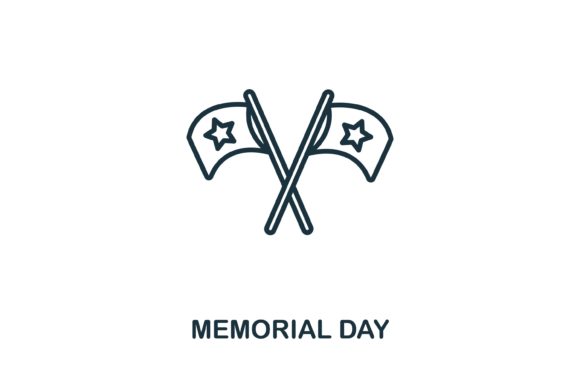
The Memorial Day icon—often a simple line illustration of a poppy, flag, or wreath—serves as a visual anchor for templates, web design, infographics, and branding materials. Its value lies in its clarity and adaptability. With an EPS and JPG file included, this vector graphic can be easily edited and integrated into various formats without losing quality.
For marketers and designers, the icon offers a way to signal relevance without overcomplicating the message. It can be used subtly in headers, promotional banners, or social media graphics to evoke the spirit of the holiday while maintaining a clean, professional aesthetic. However, the visual should always serve a broader strategic purpose, not just fill space.
Practical Use Cases for the Memorial Day Icon
- Marketing Campaigns: Use the icon in email headers or landing pages to visually reinforce a Memorial Day sale or tribute post.
- Infographics: Incorporate the symbol into data visualizations about military history, national service, or holiday spending trends.
- Website Navigation: Feature the icon in seasonal menus or holiday-specific sections to improve user experience.
- Educational Content: Illustrate timelines or historical overviews with the icon to maintain visual consistency and thematic relevance.
When to Use Memorial Day in Your Planning
The timing of Memorial Day makes it a natural pivot point in the annual calendar. It signals the transition from spring to summer, and for many businesses, it's a gateway to seasonal promotions, content refreshes, and customer engagement strategies. But timing alone isn't enough. Consider the following when deciding whether to incorporate Memorial Day into your plans:
- Relevance: Does the holiday align with your brand values or audience interests? If not, avoid forced connections.
- Tone: Are you honoring the meaning of the day or simply capitalizing on the weekend? Striking the right tone is essential.
- Goals: What are you trying to achieve? Awareness, conversions, community engagement—each requires a different approach.
Using Memorial Day effectively means more than slapping a flag on a sale. It requires strategic alignment with your brand's mission and audience expectations.
How to Approach Memorial Day with Intention
Intentional use of Memorial Day starts with planning. Begin by asking: What do we want to accomplish, and how does this holiday fit into the bigger picture? Here are several steps to guide your approach:
- Define the Objective: Whether it's boosting summer sales, honoring veterans, or launching a seasonal product, clarity of purpose ensures focused execution.
- Assess the Audience: Consider how your audience perceives Memorial Day. Are they looking for deals, inspiration, or meaningful content?
- Choose Visuals Thoughtfully: The Memorial Day icon should support your message, not distract from it. Use it in a way that aligns with your brand's visual identity and tone.
- Coordinate Across Channels: Ensure consistency across email, social media, web, and print. A unified message builds trust and recognition.
By treating Memorial Day as more than a calendar event, you create opportunities to strengthen brand loyalty and deliver value in a timely way.
Strategic Observations for Long-Term Impact
Memorial Day isn't just a one-day event—it's a moment that can influence your brand's positioning throughout the year. Consider how your use of the holiday aligns with longer-term goals like customer retention, brand reputation, and seasonal planning. For example:
- A retailer might use Memorial Day to introduce a summer collection, setting the tone for seasonal marketing.
- An educational platform could create a themed course or webinar series around military history or civic engagement.
- A nonprofit focused on veteran support might launch a campaign that continues well beyond the holiday itself.
Each of these examples shows how Memorial Day can be a catalyst for ongoing engagement rather than a fleeting opportunity.
Understanding the Risks of Misalignment
When Memorial Day is used without a clear strategy, it can backfire. Audiences are increasingly sensitive to inauthenticity, especially around holidays with deep cultural or emotional significance. Brands that appear to exploit the occasion for commercial gain risk damaging trust and credibility.
For example, using a Memorial Day icon in a promotional graphic without acknowledging the holiday's meaning can come across as tone-deaf. Similarly, launching a flashy sale without context may confuse your audience or dilute your brand voice.
To avoid these pitfalls, always ask: Are we adding value, or are we just adding noise?
Final Thoughts: Making Better Decisions Around Memorial Day
Memorial Day offers a unique opportunity to connect with audiences, refresh your content, and align with seasonal rhythms. But like any strategic decision, its success depends on thoughtful planning and execution. Whether you're using a simple line icon in a design project or crafting a full marketing campaign, the goal should always be to serve a larger purpose.
By grounding your approach in clear goals, relevant messaging, and intentional design, you can ensure that your use of Memorial Day contributes to long-term value—not just short-term visibility.